REEL TOP 40 RADIO REPOSITORY

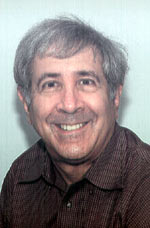
Around the eighth grade, Roddy Freeman was seduced by the magic of Top 40 radio, specifically WCAO in Baltimore during the early sixties. He writes: "That led to a fascination with all aspects of radio, including programming, music, signals and transmitter sites. I became hooked on the top 40 stations that boomed into Baltimore at night, including WABC, WLS, WKBW, CKLW and later, WCFL. I read everything about radio that I could get my hands on, including Broadcasting, Billboard, Record World and the Bob Hamilton Radio Report. And I loved listening on family vacations to out-of-town stations, such as WMCA in New York, which I always felt was one of the best top-40 stations ever. My only brush with a radio career was in my college days, when I worked on-air at two college stations, WBJC-FM/Baltimore while at the Community College of Baltimore and WMUC, the campus station at the University of Maryland. I also handled a weekend air shift at a commercial station, WNAV in Annapolis, during that time. My real career has been in the media planning and buying area at advertising agencies, which I have found to be an excellent vantage point for watching the radio business. My First full-time job was at W.B. Doner & Company in Baltimore. I have also worked at Ted Bates/New York, Cunningham & Walsh/New York, NW Ayer/New York and McCann-Erickson/Atlanta. Since 1996, I have operated my own consultancy here in Atlanta, Media Innovation." The Repository thanks Roddy Freeman for sharing! |

[Descriptions by Roddy Freeman unless otherwise indicated]
 TOP STREAM 32 Kbps (10 Khz)
 Tom Dooley, WFIL Philadelphia, January 25, 1972
(29:56)
Tom Dooley, WFIL Philadelphia, January 25, 1972
(29:56)
. . . the Boss Jocks versus the Boss Chicks . . .  This Exhibit 'SCOPED (10:06)
[Technical Note: This exhibit has speed and pitch irregularities. The 'scoped version is recommended.] When Jay Cook became an off-air program director at WFIL, he had no shortage of candidates to take over his noon-to-3 shift at what many considered the best Top-40 station in America. He selected Tom Dooley from KRIZ in Phoenix, and Dooley did not disappoint. He flawlessly executes WFIL's format with high energy and congeniality. Fred Lowrey's newscast demonstrates WFIL's commitment to excellence in all areas. Tom Dooley passed away November 9, 2010, a victim of brain cancer. THIS CONTENT WAS CONTRIBUTED TO REELRADIO EXCLUSIVELY. Duplication and/or distribution is a violation of our Terms Of Service. |

 Return to the Repository
|
|
TOP STREAM 32 Kbps (9 Khz)
Jim O'Brien, WFIL Philadelphia, January 26, 1972
(29:56)
. . . Well, I like the oldies on WFIL, because they remind me of when I was just a kid . . .
This Exhibit 'SCOPED (10:09)WFIL had worn Philly's Top 40 crown for over 5 years and had evolved into a well-oiled machine. Jim O'Brien makes it sound so easy, with his smooth, warm delivery, conversation and humor. One of the hallmarks of WFIL's format was that the jocks talked not only over the intros to records but over the intros to commercials as well. THIS CONTENT WAS CONTRIBUTED TO REELRADIO EXCLUSIVELY. Duplication and/or distribution is a violation of our Terms Of Service. |
|
Return to the Repository
|
|
TOP STREAM 32 Kbps (10 Khz)
Don Wade, WIBG Philadelphia, January 1972
(52:50)
. . . the most fantastic radio station in the entire world, because they pay my bills . . .
This Exhibit 'SCOPED (28:49)In one of several attempts to regain its glory, WIBG brought in Don Wade as its morning weapon against WFIL's Dr. Don Rose. The big-voiced Wade did a decidedly adult show while WIBG promoted a teen-oriented contest, a Grass Roots concert for the winning school. And, the station invented a new synonym for news, as Paul Howard delivers WIBG Contemporary. At this time, of course, Don Wade's future wife Roma wasn't even a twinkle in his eye, nor was the morning talk shift at WLS Chicago, which the couple hosted since 1985. Don and Roma retired from the WLS morning show in January, 2013. Don Wade lost his battle with brain cancer in September, 2013. He was 72. THIS CONTENT WAS CONTRIBUTED TO REELRADIO EXCLUSIVELY. Duplication and/or distribution is a violation of our Terms Of Service. |
|
Return to the Repository
|
|
TOP STREAM 32 Kbps (10 Khz)
Bobby Bennett, WOL Washington DC, March 29, 1972
(29:25)
. . . Superbad! . . .
This Exhibit 'SCOPED (09:27)Bobby Bennett, aka The Mighty Burner, came to WOL from Pittsburgh's WAMO and held the noon to 3 shift (though he is heard in the 3PM hour here.) Bennett's slick, smooth, fast-talking style fit right in with the reverberating 1972 version of the "Big O L". He opened his mic at every opportunity, coming in to, going out of, and even during songs. This recording features Sheraton's then-famous 8-oh-oh-325-3535 jingle. Bobby Bennett later worked at Howard University's WHUR-FM in D.C. and later as host of Soul Street on XM satellite radio. Bobby Bennett died near his retirement home in Punta Gorda, FL on Sept. 8, 2015. THIS CONTENT WAS CONTRIBUTED TO REELRADIO EXCLUSIVELY. Duplication and/or distribution is a violation of our Terms Of Service. |
|
Return to the Repository
|
|
TOP STREAM 32 Kbps (10 Khz)
Bill Haywood, WOL Washington DC, March 30, 1972
(29:25)
. . . put your teeth in and nail your wig on your head . . .
This Exhibit 'SCOPED (11:45)By the mid-sixties, the Washington DC market had sprawled to the point where the 1,000 watts-day/250 watts-night signal of WOL could no longer compete against WMAL and WRC with its MOR format. Sonderling bought WOL in 1965 and introduced a soul format that set Washington on its ear. WOL brought in top-notch talent and presented a sound that was as slick as any Top-40 station. With Washington's black population still residing close in, WOL rocketed to #1 within weeks and stayed at or near the top for almost 10 years. Big Bill Haywood crossed town from WOOK to handle mornings in the early 1970's. In this period, WOL was in a finely-tuned-machine mode. Notable on this aircheck is that WOL's imaging and jingles sounded very "white". The station had a couple of white program directors in its heyday, Ted Atkins and Dave McNamee. THIS CONTENT WAS CONTRIBUTED TO REELRADIO EXCLUSIVELY. Duplication and/or distribution is a violation of our Terms Of Service. |
|
Return to the Repository
|
|
TOP STREAM 32 Kbps (10 Khz)
Eddie Rogers, WEAM Arlington/Washington D.C., April 26, 1972
(01:00:00)
This Exhibit 'SCOPED (21:57) . . . All of you who ever listened to the Eddie Rogers Show, God Bless You, best of luck . . .
This aircheck features the final hour of Eddie Rogers on WEAM before he made the big jump to CKLW. Rogers had been at WEAM for 3 years, a lengthy stint for the station whose long-time general manager seemed to favor the jock-du-jour plan. A year earlier, another WEAM personality, Bill Campbell (Gable), had left for WHBQ in Memphis and would later follow Rogers to CKLW. Rogers started at WEAM in morning drive before moving to afternoons and was a superb talent. The aircheck reflects a time when singles sales had declined, and top-40 stations were looking for a way to address the surging popularity of albums. At the time of this recording, WEAM was only about 3 years away from its demise. Most of the AM stations on the Washington dial had sub-par signals. At night, WEAM suffered out-of-town interference problems on the northeast side of the Washington market, problems audible on this aircheck as sunset approached. But for years WEAM was saved by the fact that its main competition, WPGC, was a daytimer. Even as a daytime station, WPGC gave WEAM a run for its money. But when Washington became one of the earliest markets for FM dominance, WPGC-FM's success spelled the end of WEAM as a top-40 operation. THIS CONTENT WAS CONTRIBUTED TO REELRADIO EXCLUSIVELY. Duplication and/or distribution is a violation of our Terms Of Service. |
|
Return to the Repository
|
|
TOP STREAM 32 Kbps (10 Khz)
Johnny Holliday, WWDC Washington DC, April 28, 1972
(28:01)
. . . the WWDC Radio One-Ders softball team, made up of all sorts of assorted has-beens and hangers-on . . . Johnny Holliday's music radio stint in Washington was the bridge from his Top 40 days to his vocation as the voice of University of Maryland sports. As a KYA alumnus, Johnny's AVCO connection landed him in the morning slot at personality-AC WWDC in 1969. Immediately, Holliday's smarts, creativity and sense of timing made him the market's most talked-about talent — he was the radio guy's radio guy. On this aircheck, WNBC's Don Imus phones Holliday for a conversation broadcast in both New York and D.C. Comments are made on the call regarding Pat Whitley, former WWDC Program Director who had joined WNBC, working under GM Perry Bascom. One of Holliday's regular characters, Billy Biceps, stops by for a short tune, and the spotlight shone on "Captain" Dan Rosenson is unique for a traffic reporter. THIS CONTENT WAS CONTRIBUTED TO REELRADIO EXCLUSIVELY. Duplication and/or distribution is a violation of our Terms Of Service. |
|
Return to the Repository
|
|
TOP STREAM 32 Kbps (10 Khz)
John Young, WMAK Nashville TN June 1972
(29:56)
. . . What did they say? I didn't hear . . .
This Exhibit 'SCOPED (11:16)[Technical Note: This exhibit, which sounds like it was recorded from a moving vehicle, begins with a high static level and signal dropout, but the fidelity improves after a few minutes. Because of extreme signal loss, the first song was restored from an original 45.] John Young is a consummate professional as he navigates though late morning on WMAK. By this time, WMAK was the market's only Top 40 station. Lower-powered WKDA, a very major Top 40 force for many years, had gone country in 1970. In this aircheck, WMAK has an adult Top 40 sound, using TM's Phase Two jingle package — which was suitable for both Top 40 (WCFL, Chicago) and adult contemporary (WCBM, Baltimore) stations. A young Scott Shannon, who did evenings on WMAK at the time, is heard on a spot for "School's Out Day" at Fair Park. THIS CONTENT WAS CONTRIBUTED TO REELRADIO EXCLUSIVELY. Duplication and/or distribution is a violation of our Terms Of Service. |
|
Return to the Repository
|
|
TOP STREAM 32 Kbps (10 Khz)
Andy Barber, KUDL Fairway/Kansas City KS, June 14 1972
(24:47)
This Exhibit 'SCOPED (07:46)
. . .
The only true rock 'n' roll station in the K.C. area
. . .
When 60's Top 40 pioneer WHB settled into a more mature sound, it created an opening for a more aggressive approach on KUDL in Fairway, southwest of Kansas City. They jumped into the format hole with a younger, rock-oriented approach to playing the hits. Andy Barber, signal disadvantage notwithstanding, carved out a niche and enjoyed some success. Though KUDL initally programmed a disproportionately high amount of R&B, this 1972 version incorporated tighter formatics and leaned heavily to the rock side of Top 40. THIS CONTENT WAS CONTRIBUTED TO REELRADIO EXCLUSIVELY. Duplication and/or distribution is a violation of our Terms Of Service. |
|
Return to the Repository
|
|
TOP STREAM 32 Kbps (10 Khz)
Chris Alexander, KIMN Denver, CO. June 1972
(29:21)
. . . get into this . . .
This Exhibit 'SCOPED (07:03)When I listen to this aircheck of KIMN, I am reminded of Bill Drake's influence on virtually every Top 40 station in America. This early-seventies version of KIMN was a good one, with Chris Alexander moving through late morning nicely. And while the station sounds up-to-date and pleasant, it does not have the competitive edge associated with stations in the heat of battle. THIS CONTENT WAS CONTRIBUTED TO REELRADIO EXCLUSIVELY. Duplication and/or distribution is a violation of our Terms Of Service. |
|
Return to the Repository
|
|
TOP STREAM 32 Kbps (10 Khz)
John Harding, WCAO Baltimore, July 3, 1972
(29:21)
. . . just give it some time, you'll turn out to be a happy person . . .
This Exhibit 'SCOPED (09:01)When Ron Riley started programming WCAO in 1971, 10-year midday veteran Alan Field decided to leave rather than do things the Riley way. John Harding, 23 at the time, was the first fulltime jock brought in by Riley, and he handled the noon-3 shift. Harding's great voice and relaxed delivery proved to be a hit and put his career on the fast track. He departed WCAO later that year for WIBG in Philadelphia, where he was known as John Wesley Harding. After a very short stint in Philly, he accepted a job at Chicago's WCFL. On his way to the Windy City in 1973, the young Harding took his own life. THIS CONTENT WAS CONTRIBUTED TO REELRADIO EXCLUSIVELY. Duplication and/or distribution is a violation of our Terms Of Service. |
|
Return to the Repository
|
|
TOP STREAM 32 Kbps (10 Khz)
Johnny Dark, WCAO Baltimore, August 18, 1972
(29:14)
. . . Golden Grass from the Grass Roots . . .
This Exhibit 'SCOPED (14:31)Johnny Dark is my favorite Baltimore radio personality of all time. Other personalities, including Kirby Scott (Confer) and Bob Foster, made a bigger splash during their stints in Baltimore. But Johnny Dark was always there, always sounding bright and exciting. He arguably sounded the same in his mid-fifties as in his twenties. Dark first joined WCAO in 1961 from WMEX in Boston as the nighttime jock. He left for Washington's WEAM in 1965 but returned to WCAO a year later. He stayed through WCAO's remaining top 40 and then country days. He left in the early nineties when the format changed to black gospel. Johnny Dark handled mornings, afternoons and evenings at various times during his years at WCAO. In this recording, he's doing afternoon drive. By 1972, WCAO had evolved to the adult side of Top 40, leaving the teens to FM upstart WLPL. THIS CONTENT WAS CONTRIBUTED TO REELRADIO EXCLUSIVELY. Duplication and/or distribution is a violation of our Terms Of Service. |
|
Return to the Repository
|
 TOP STREAM 64 Kbps (12 Khz)
Rick Carroll, KKDJ-FM Los Angeles, August 1973
(40:57)
TOP STREAM 64 Kbps (12 Khz)
Rick Carroll, KKDJ-FM Los Angeles, August 1973
(40:57)
. . . Now, you're probably saying to yourself, why can't I be a hand, a nose, or some other part of the body . . . This is a rare recording of the late Rick Carroll on KKDJ, the predecessor to KIIS on 102.7 in Los Angeles. KKDJ was a solid-sounding station that should have made it. Of course, Carroll was later to gain notoriety by creating the rock format at KROQ-FM that pretty much remains, to this day. Some musical selections in this exhibit were restored. THIS CONTENT WAS CONTRIBUTED TO REELRADIO EXCLUSIVELY. Duplication and/or distribution is a violation of our Terms Of Service. |
|
Return to the Repository
|
|
TOP STREAM 64 Kbps (10 Khz)
Jay Stevens, KKDJ-FM Los Angeles, August 1973
(45:18)
This Exhibit 'SCOPED (09:31)During its all-too-short life, KKDJ-FM was an excellent-sounding station. Jay Stevens, the first afternoon drive personality in KFRC's Drake era, made the trip down the coast to handle afternoon chores at "the new L.A. radio leader." Stevens combines a solid performance with KKDJ's music-intensive format, talking up to posts with that great voice. THIS CONTENT WAS CONTRIBUTED TO REELRADIO EXCLUSIVELY. Duplication and/or distribution is a violation of our Terms Of Service. |
|
Return to the Repository
|
|
TOP STREAM 32 Kbps (10 Khz)
Captain John (Lodge), KHJ Los Angeles, August 1973
(29:08)
This Exhibit 'SCOPED (06:08). . . In the last 39 weeks, nearly 390,000 people have flocked to see Deep Throat, in a single Los Angeles theatre . . . This recording was made during the week that Charlie Van Dyke joined KHJ as Program Director and morning man. KHJ, at the time, was just a shadow of its former Boss Radio self. Captain John kept things moving from 6 to 9 in the evenings. THIS CONTENT WAS CONTRIBUTED TO REELRADIO EXCLUSIVELY. Duplication and/or distribution is a violation of our Terms Of Service. |
|
Return to the Repository
|
|
TOP STREAM 32 Kbps (10 Khz)
Greaseman, WRC Washington D.C., August 9, 1973
(58:32)
This Exhibit 'SCOPED (30:05). . . geez, I wonder what James Michael Wilson's wife looks like? . . . The Greaseman took his act from WAXC, Rochester to Washington's newest Top 40 station for his first taste of major market radio. "The big greasy one," whose normal shift was late night, is subbing for Simon Trane in early evening on this recording. The Greaseman re-invented himself a few times in his career. At this poimt, his personna is of an old, poor farmer. He sticks to WRC's music-intensive format but slips in some funny lines. As an 0&0, that WRC is still saddled with some NBC News requirements is evident here. The aircheck contains some early Mark Driscoll imaging, created when he was doing evenings in the station's first year. And program director Lee Sherwood brought the Prize Patrol with him when he came to WRC from WFIL. It's difficult to remember when Top 40 stations really played oldies, especially at night, but are there some included in this segment. THIS CONTENT WAS CONTRIBUTED TO REELRADIO EXCLUSIVELY. Duplication and/or distribution is a violation of our Terms Of Service. |
|
Return to the Repository
|
|
TOP STREAM 32 Kbps (10 Khz)
Johnny Andrews, WRC Washington D.C., December 25, 1973 (30:29)
This Exhibit 'SCOPED (05:06). . . It's so much fun being a disc jockey, you get to work on Christmas Day . . . Johnny Andrews was the midday personality over the station's 3-year Top 40 run. Prior to WRC, Andrews had worked for Susquehanna at WHLO in Akron, Ohio for twelve years. Lee Sherwood, first Top-40 PD at WRC, told me that he was driving through Ohio and heard Andrews. Sherwood said that Andrews was exactly the voice he was looking for, and that he called Andrews on the spot to offer him a job. Andrews immediately responded, "I'll take it." After WRC's Top-40 format succumbed in 1975, Andrews rejoined Susquehanna as Operations Manager of WSBA in York, PA. He later became VP & General Manager at KTAR in Phoenix, AZ. THIS CONTENT WAS CONTRIBUTED TO REELRADIO EXCLUSIVELY. Duplication and/or distribution is a violation of our Terms Of Service. |
|
Return to the Repository
|
|
TOP STREAM 32 Kbps (10 Khz)
Simon Trane, WRC Washington D.C., December 25, 1973 (27:15)
This Exhibit 'SCOPED (05:16). . . W R C Doubles The Gold! . . . And here is Simon Trane from Christmas Day, 1973. Trane usually pulled a night shift at WRC. Trane was also heard on KRUX in Phoenix, KILT in Houston and WQXI in Atlanta, GA. THIS CONTENT WAS CONTRIBUTED TO REELRADIO EXCLUSIVELY. Duplication and/or distribution is a violation of our Terms Of Service. |
|
Return to the Repository
|
|
TOP STREAM 64 Kbps (10 Khz STEREO)
Walt Baby Love, WXLO (99X) New York, August 1974
(27:17)
This Exhibit 'SCOPED (10:26). . . Walt Baby Love kickin' X at the Super X . . . Walt Baby Love was in fine form on this aircheck of New York's 99X from a hot summer Saturday in August,1974. The youthful-sounding 99X was a far different listen from any of its RKO Top-40 sister stations, including its predecessor, WOR-FM. It was more Q-like than Drake-like and prominently featured a shotgun jingle. Unlike the general Top-40 landscape at the time, 99X's clock followed the pattern of a song followed by a commercial followed by a song followed by a commercial, with the exception of a music sweep at the top of the hour. THIS CONTENT WAS CONTRIBUTED TO REELRADIO EXCLUSIVELY. Duplication and/or distribution is a violation of our Terms Of Service. |
|
Return to the Repository
|
|
TOP STREAM 44 Kbps (10 KHz MONO)
Dan Ingram, WABC New York, December 9, 1980 (01:02:19)
This Exhibit 'SCOPED (42:37)
. . . We're looking for John Lennon's medal . . . From the morning of December 9, 1980, the morning after the murder of John Lennon, comes an aircheck loaded with history, following the de-throning of WABC by WKTU-FM and its disco format. This was during the brief time that Dan Ingram held down morning drive, replacing Harry Harrison, before moving back to afternoons. WABC was in full John Lennon mode, with all Beatles music and commentary by Ingram. The All-Lennon newscasts included John Meagher, traffic reporter Joe Nolan and feature reporter Kathleen Maloney. Ingram spoke with WABC great Bruce Morrow, as well as former Program Director Rick Sklar. Apparently, most of these legendary professionals had very little sleep following the tragic event the day before. At one point, Ingram accidentally switches the story about Ringo Starr's missing medal to Lennon's missing medal. THIS CONTENT WAS CONTRIBUTED TO REELRADIO EXCLUSIVELY. Duplication and/or distribution is a violation of our Terms Of Service. | ||
|
Return to the Repository
|
|
TOP STREAM 32 Kbps (10 Khz)
WNEW-FM New York Salutes WABC, May 1982
(46:51)
. . . Cousin Bruce Morrow wears Jockey Classic Briefs . . . This is a portion of an incredible piece of radio, put on by WNEW-FM during the week that WABC ended 22 years as a Top-40 station. Producer Earl Bailey spared no energy to create this masterpiece. It included interviews, airchecks, stories, listener comments and music. This exhibit opens with Bob Lewis, who is followed by Bruce Morrow, Dan Ingram, Scott Muni, Rick Sklar, Chuck Leonard and Herb Oscar Anderson. Two of my favorite segments are an aircheck of the Brief Showers incident, and Chuck Leonard's story about how he got hired. THIS CONTENT WAS CONTRIBUTED TO REELRADIO EXCLUSIVELY. Duplication and/or distribution is a violation of our Terms Of Service. |
|
Return to the Repository
|
|
TOP STREAM 64 Kbps (12 KHz STEREO)
Scott Shannon, J.R. Nelson, WHTZ New York August 4, 1983
(31:29)
. . . Next thing I know, the Geator with the Heater will be on the line . . . [Portions previously featured on Z-100 composite exhibits.] It was less than a week since Z-100 (WHTZ-FM) and its Morning Zoo had signed on — and the day when its new antenna atop the Empire State Building was put into service. The new site replaced the "pea shooter" transmitter of Z-100's predecessor station on 100.3 - WVNJ-FM. The aggressive approach that would take the station "from worst to first" in four months is evident here with a tongue-in-cheek guest appearance by Don Imus. Scott Shannon is paired here by newscaster J.R. Nelson, who was also the initial imaging voice of Z-100. THIS CONTENT WAS CONTRIBUTED TO REELRADIO EXCLUSIVELY. Duplication and/or distribution is a violation of our Terms Of Service. |
|
Return to the Repository
|
|
TOP STREAM 132 Kbps (10 KHz STEREO)
The Night Wolf, WMAR-FM Baltimore MD September 3, 1983 (restored) (59:31)
This Exhibit 'SCOPED (07:58)
. . . Ahyoooooooooooooooooooooooooooooooooooooooooooooooooo . . .
This one will leave you laughing. Radio gave us Wolfman Jack, and I guess this recording of The Night Wolf (Pete Michaels) teaches us there are a couple schools of thought regarding how to talk like a wolf and howl like a wolf. This flexible personality stayed at WMAR after a later format change to AC, using his Pete Michaels moniker and sounding like a, well...human. In later years, Michaels was paired with his wife, Brenda Bissett, on a Syracuse morning show. THIS CONTENT WAS CONTRIBUTED TO REELRADIO EXCLUSIVELY. Duplication and/or distribution is a violation of our Terms Of Service. | ||
|
Return to the Repository
|
|
TOP STREAM 64 Kbps (12 KHz STEREO)
Dancin' Danny Wright, WRQX-FM Washington D.C. August 1984 (09:34) . . . giving synthesizers to the English was like giving firewater to the Indians . . . ABC's Q107 (WRQX-FM) was the station that replaced WPGC as Washington's Top 40 kingpin. This 'scoped aircheck features Double D from August, 1984. Dancin' Danny Wright did a nice job of weaving witty lines into Q107's more-music format. Danny went on to WGAR in Cleveland and hosted the Jones Radio syndicated Danny Wright All Night until December, 2008. In 2009, Danny was hosting a syndicated weekend country show called The Live Ride With Danny Wright. THIS CONTENT WAS CONTRIBUTED TO REELRADIO EXCLUSIVELY. Duplication and/or distribution is a violation of our Terms Of Service. |
|
Return to the Repository
|
|
TOP STREAM 64 Kbps (12 KHz STEREO)
Fast Jimi Roberts, WPLJ-FM New York, December 1984
(06:00)
. . . putting the squeeze on Zit-100 . . . This aircheck reflects the hot and heavy war between WPLJ and Z-100 (WHTZ-FM) in late 1984. WPLJ is giving away money and warns competitors to "get out your checkbook or get out of town." WPLJ had slowly segued from AOR to CHR over the latter months of 1983, with Larry Berger staying on as PD. A year later, Hit Radio 95 is starting to get its act together. But the station would not see its best ratings for another year, after it had been rechristened Power 95. Since its August, 1983 sign-on, Z-100's Scott Shannon had constantly attacked WPLJ on the air, often making fun of Larry Berger. WPLJ remained quiet until late in 1984, when its frustrations exploded with a parody of Z-100's imaging. Z-100 threatened a lawsuit, and WPLJ stopped airing the piece. But on this aircheck, WPLJ refers to Z-100 as "Zit 100." Fast Jimi Roberts was a natural and always one of my favorites. I believe he came to WPLJ straight from a small FM in Toms River, New Jersey. He was excellent on WPLJ from his very first weekend and eventually replaced Pat St. John in afternoon drive. He remained at WPLJ for 15 years. As of 2006, Fast Jimi entertains at Mix 106.5 in Baltimore and does voiceover work as Robert Jacobs Voice Overs. THIS CONTENT WAS CONTRIBUTED TO REELRADIO EXCLUSIVELY. Duplication and/or distribution is a violation of our Terms Of Service. |
|
Return to the Repository
|
|
TOP STREAM 64 Kbps (12 KHz STEREO)
Harry Nelson, WAPP-FM New York, December 1984
(05:01)
. . . sometime this afternoon, I'll be opening the last present under the WAPP Christmas Apple Tree . . . With Top 40 giants Z100 (WHTZ-FM) and WPLJ-FM already at each other's throats, I'm still curious as to what convinced Doubleday to join the CHR war with its move-in, WAPP-FM, in late 1984. Z100 and WPLJ both had impressive ratings, and WAPP had some signal limitations, especially in the important New Jersey suburbs. WAPP did have a good product and brought in heavyweights from around the country, including Harry Nelson, Gary Spears and Bobby Ocean. But the station was out of the CHR format a few months later. THIS CONTENT WAS CONTRIBUTED TO REELRADIO EXCLUSIVELY. Duplication and/or distribution is a violation of our Terms Of Service. |
|
Return to the Repository
|
|
TOP STREAM 64 Kbps (13 KHz STEREO)
Jay Thomas, WKTU New York, December 1984
(06:31)
. . . It's rum, brandy, and it looks like her sister sat in it . . . Jay Thomas was one of those personalities who really put on a show, and Friday was the day of the in-studio audience. This upbeat holiday performance features a station promo sung to the tune and sound of "Little Saint Nick" by The Beach Boys. Thomas' newsman was longtime New York sportscaster Chip Cippola THIS CONTENT WAS CONTRIBUTED TO REELRADIO EXCLUSIVELY. Duplication and/or distribution is a violation of our Terms Of Service. |
|
Return to the Repository
|
|
TOP STREAM 64 Kbps (13 Khz STEREO)
Shadow Stevens, Jack Da Wack, Z-100 New York January 4, 1985 (RESTORED) (46:19)
This Exhibit 'SCOPED (07:58). . . Larry Booger! Larry Booger! . . . Z100 (WHTZ) was over a year old, and PD Scott Shannon had molded New York's number one station into a polished product. On this aircheck, afternoon drive personality Shadow Stevens turns the mike over to evening jock Jack Da Wack. Z100 was not the typical CHR into which it later evolved. Shannon had injected a rogue element into the sound. Competitor WPLJ had been the butt of jokes of Shannon since he and his Z Morning Zoo debuted. He nicknamed WPLJ "The Wimp", and Larry Berger, WPLJ's PD "Larry Booger". This recording features a song promoting Z100, Zoo On It, which repeatedly refers to WPLJ and Berger. THIS CONTENT WAS CONTRIBUTED TO REELRADIO EXCLUSIVELY. Duplication and/or distribution is a violation of our Terms Of Service. |
|
Return to the Repository
|